
When I talk to clients about AI, I keep returning to the same point: we talk too much about the tools, and not enough about the people using them.
Of course, the technology matters. Models, licences, governance, security, policies and platforms all matter. But those things alone don’t change how work gets done. The real shift happens in everyday moments where people experiment, learn, make mistakes, ask better questions and find new ways to work.
That is why the conversation about AI adoption is really a conversation about skills. We are seeing a skills revolution, and in many companies, it is already happening quietly in the background.
Take Shadow AI as an example. Shadow AI is where people use AI tools without that use being formally approved, managed or even always visible. It is usually considered a risk, for good reason. People using public AI tools without understanding data protection and confidentiality can create real problems. We absolutely need clear guardrails and good AI literacy.
But Shadow AI tells us something important. It shows us that people are curious. They are trying to solve problems. They are looking for better ways to do their jobs. Some are using AI to draft proposals, summarise meetings, improve customer communications, analyse information or speed up repetitive admin. Not because they have been told to, but because they see the value.
So, leaders need to look at this differently. It is not just a training challenge. It is a talent challenge. We need to help everyone build confidence with AI and spot the people who are already learning by doing.
Your best AI champions may not have “digital” in their job title or be the loudest voices in the room. They may simply be quietly finding smarter ways to get work done. The colleague who has cut hours out of a reporting process. The person who has found a better way to prepare for meetings. The team member who is helping others understand what good use of AI actually looks like.
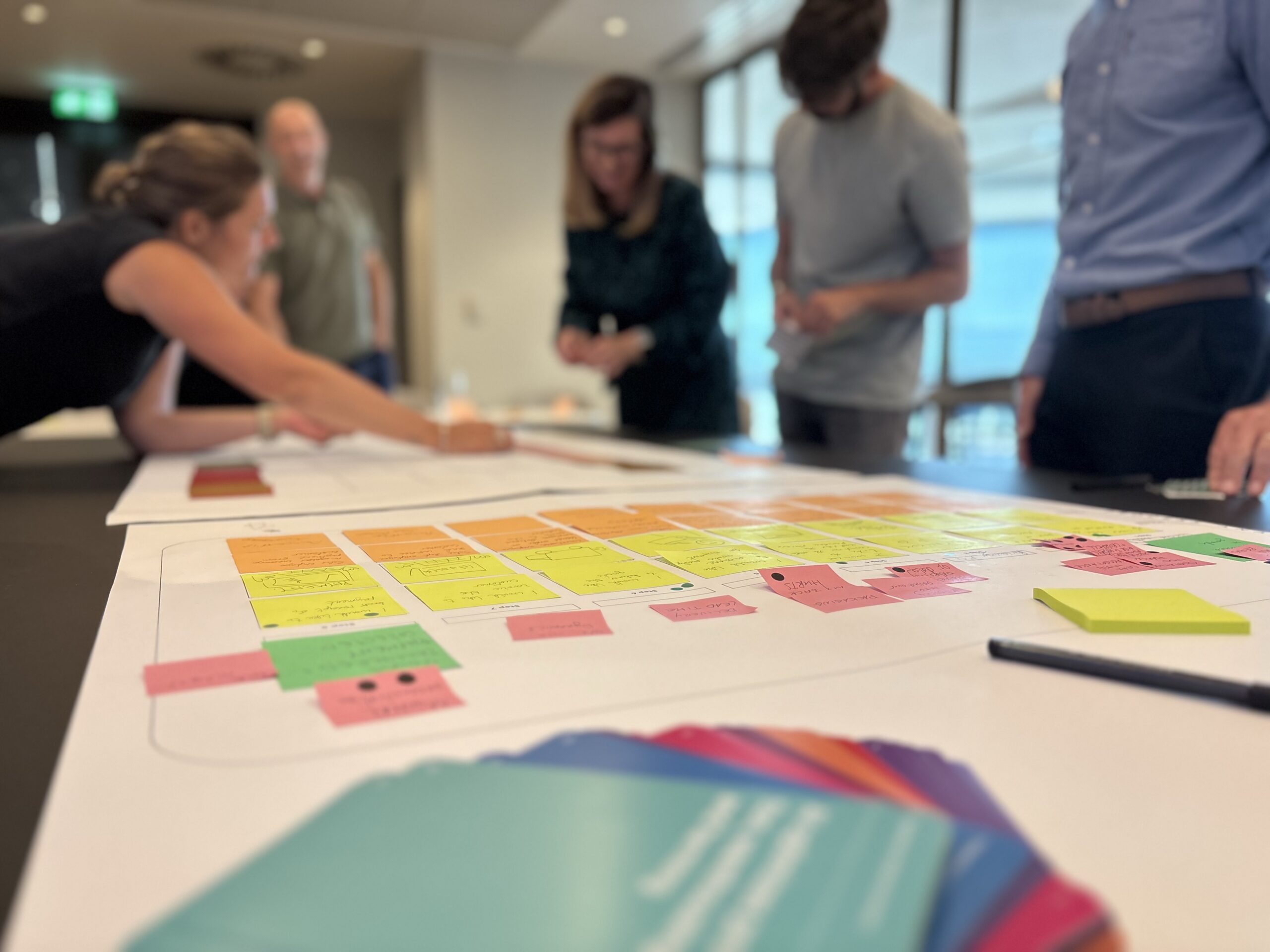
We see this through the AI Design Sprint® work we deliver for clients. When you bring people together to map real processes and openly discuss where time is being lost, the best ideas often come from those closest to the work. They aren’t trying to be innovative for the sake of it, they know exactly where the friction is.
That might be the customer service adviser who knows which queries come in again and again. The finance analyst who spends too long moving data around spreadsheets. The project manager producing the same updates every week. The HR team working through large volumes of documentation. They can tell you where AI might genuinely help, because they live the process every day.
The value of a design sprint is that it gives those ideas structure. It creates space to explore what is possible, but also to ask sensible questions – is the data good enough? Is this ethical? Is it secure? Does it actually save time? Does it improve the experience for customers or colleagues? That balance really matters.
Many companies get stuck by treating AI like a normal system rollout. Give people access, run a webinar, send some comms and hope it lands? AI does not work like that. It changes how people think, make decisions, write, analyse, plan and collaborate. It has to be embedded into the way people work, not bolted on as another thing to learn.
Generic training has its place, but it rarely changes behaviour on its own. People need role-specific practical examples. They need time to try things. They need managers who will ask, “Could AI help with this?” rather than leaving it as something people experiment with in the margins. Most of all, they need permission to learn.
This is why the wider skills conversation matters so much. There is plenty of noise about AI replacing jobs, but the more immediate question is how quickly the skills within jobs are changing. Roles are not standing still. How we write, research, communicate, analyse and make decisions is shifting around us.
The skills that matter most are not only technical. Curiosity matters. Judgement matters. Clear communication matters. Creativity matters. Empathy matters. These skills help people use AI well, challenge the output, understand the context and make better decisions.
Leadership is the real lever, not the AI strategy document or launch material. It comes down to behaviour and if leaders are not using AI themselves, talking about it in the context of real work and making time for teams to learn, then adoption will always feel optional. People watch what leaders do far more than what they say.
The companies that will move fastest are not necessarily the ones with the biggest budgets. They are the ones willing to be honest about how work happens. Their people are already experimenting. Give them a safe framework, connect them with others and turn individual learning into shared capability.
So my advice is simple: do not start by trying to shut everything down. Start by listening and asking where AI is already being used. Ask what works and what feels risky or unclear. Ask where people are saving time and where they still need help.
Then put the right guardrails around it. Give people clear guidance, build AI literacy and create space for people to share use cases. Identify champions across the business, not just the technology team and pick one or two practical priorities where AI could make a real difference, supporting people properly as they learn.
The biggest opportunity is not controlling Shadow AI. It is to understand the skills emerging alongside it. In many companies, the capability is already there. It is hidden in everyday work, curious people, and small experimental projects that have not yet been joined up. When leaders recognise the capability that already exists, create a permissive environment for experimentation and scale the right projects responsibly, AI adoption becomes more than a technology project. It becomes a people-led skills revolution.
This article first appeared in September’s edition of Connect.